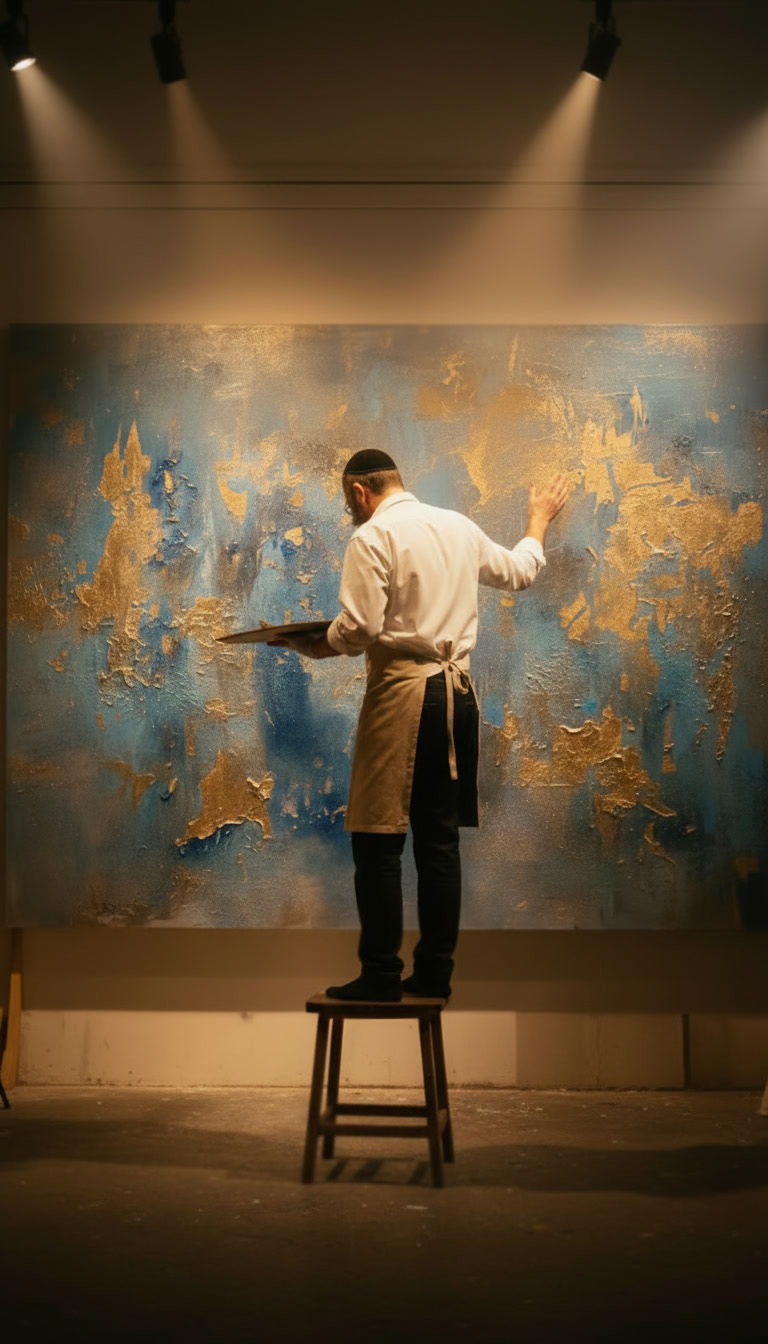
Jerusalem lives in every layer
“He does not paint what Jerusalem looks like.Kraus Gallery · Jerusalem
He paints what Jerusalem feels like —
and sends it to your wall.”

Aaron has been drawing since the age of six. His parents recognized the gift early and sent him to study with leading artists — David Wakstein’s studio, the Tel Aviv Museum of Art, and later the HIT Holon Institute of Technology, where he developed his abstract visual language.
Even as a child, he was never interested in copying what he saw. He was looking for something he hadn’t yet found — a way to make the invisible visible. A way to put feeling on canvas.
A decisive encounter came through visits to the private studio of master painter Avi Feiler — one of the few artists he allowed inside. Feiler shared with Aaron something rarely given: not instruction, but revelation. He spoke of “butterflies in the stomach” — the feeling that must arrive at the start of every new canvas, or else the work should not begin. And he described his own process as simply being a witness: “I am only a bystander to what is happening.” He gathers from life — observing, absorbing, collecting — and then follows those butterflies onto the canvas.
Aaron carried both of these gifts forward. The permission to feel before you paint. The discipline to wait until you do.
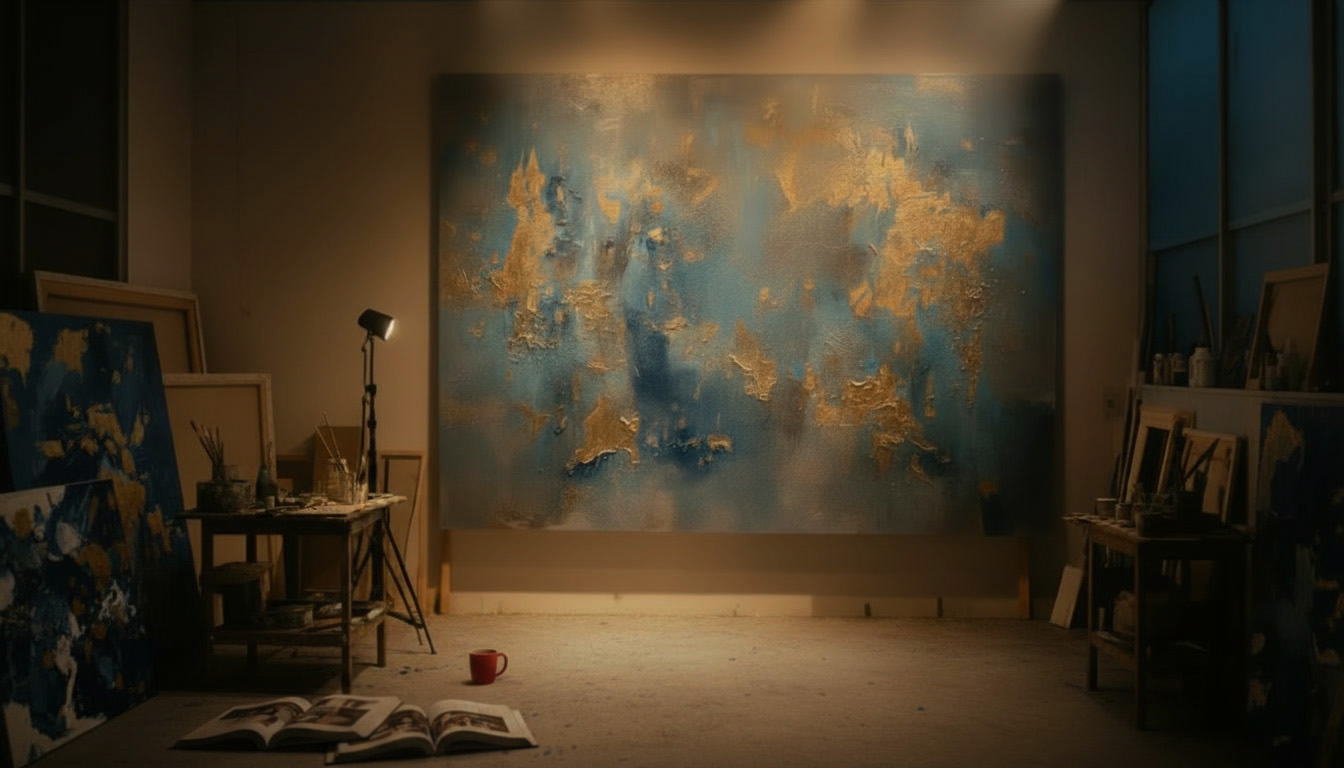
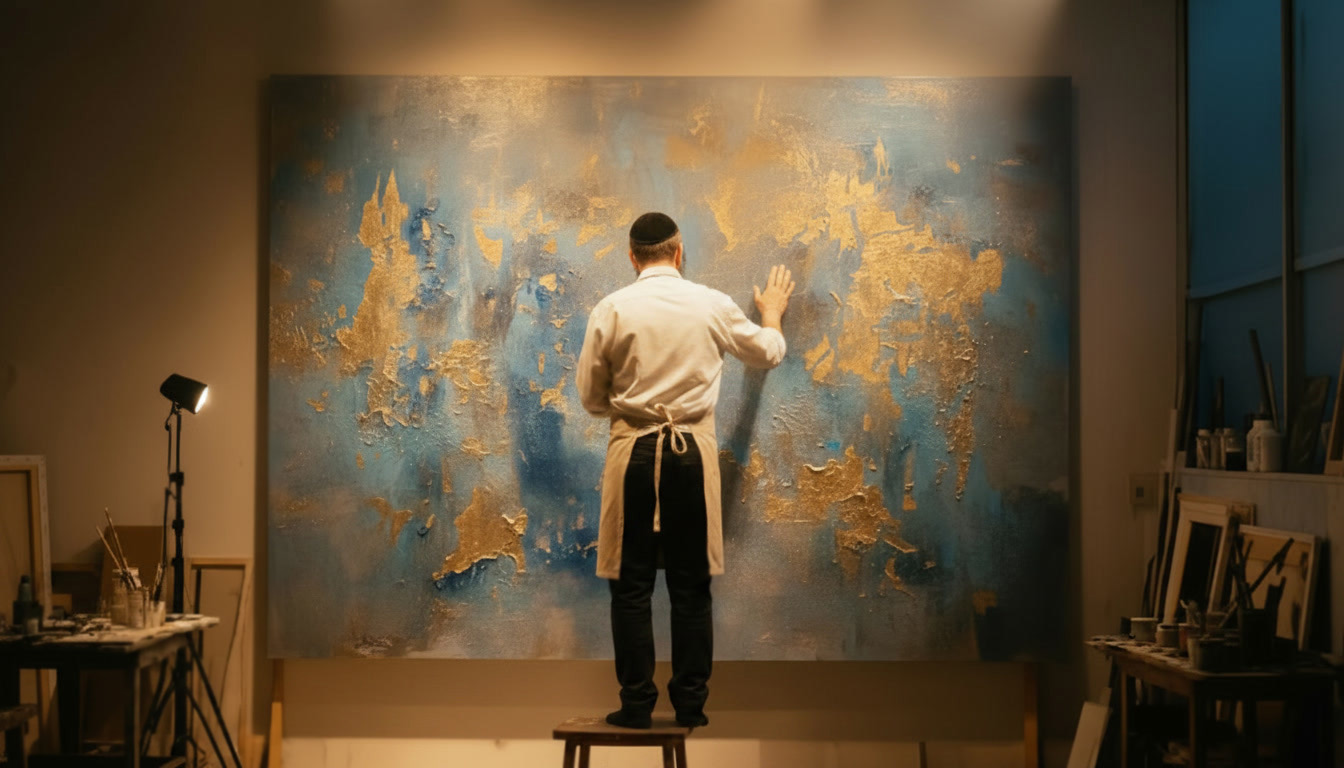
The search for a subject worthy of his style brought Aaron to Jerusalem — and Jerusalem did not disappoint. The city offered everything: ancient light that falls differently here than anywhere else on earth, streets worn smooth by centuries of longing, figures who carry their history on their faces.
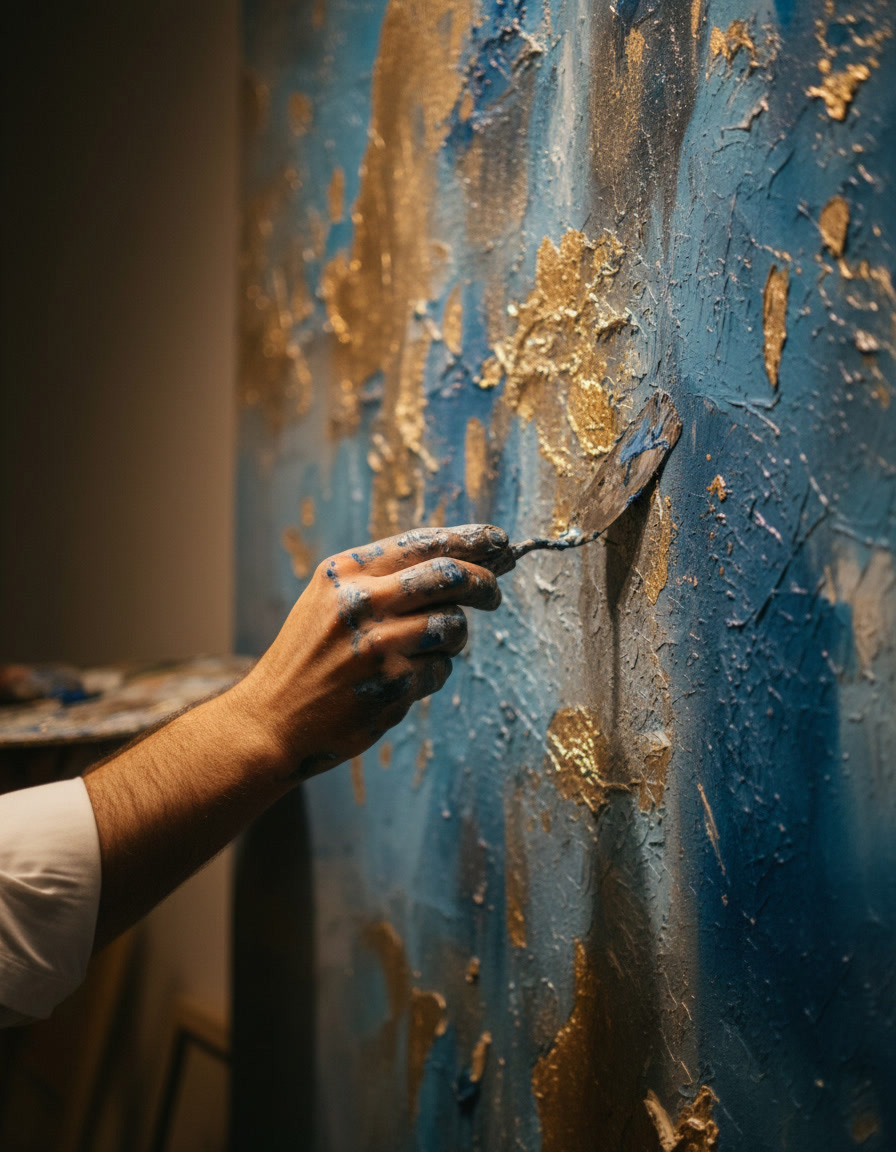
He didn’t come to document the city. He came to inhabit its frequency — to absorb its kedusha, its contradictions, its unbroken thread of meaning — and find a way to compress all of that into paint, texture, and gold.
Jerusalem is not a backdrop in his work. It is the subject. The people, the stones, the celebrations and the mourning — the longing for a better, unified world that pulses beneath every surface of the city.

“Every time I came to her studio, she would ask me —Aaron Kraus — on Huvy Elisha, Jerusalem
‘Hey Aaron, did you come to help me making the world happier?’”

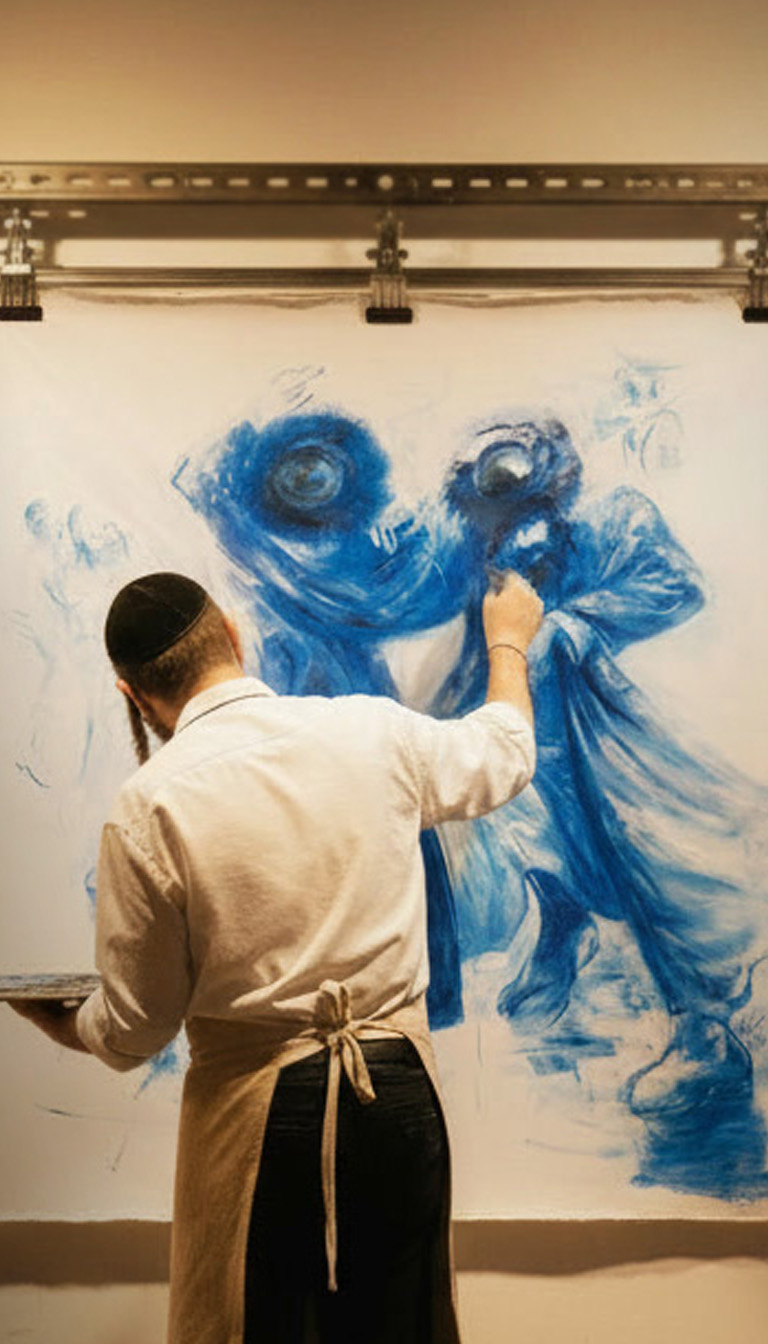
Aaron Kraus in his Jerusalem studio — working on Mixed Media of Huvy Elisha, Blue Hassidic Dance
The turning point came in the studio of Huvy Elisha — Jerusalem’s great post-impressionist, whose work earned her a place among the most significant Israeli painters of her generation. Aaron served as her senior studio assistant for years, working alongside her canvases and absorbing something that cannot be learned from a curriculum.
Huvy taught him to pursue the spiritual essence of a subject rather than its physical detail. Whether painting a figure or a landscape, the goal is to portray the intrinsic self of the subject — what is felt, not merely seen. That philosophy became the heartbeat of everything Aaron creates.
The question she asked him every time he arrived — “Did you come to help me making the world happier?” — is not decorative. It is a mission statement. It is what every painting is still trying to answer.
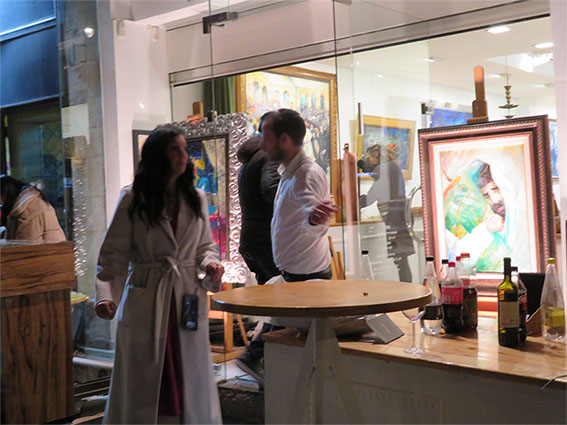
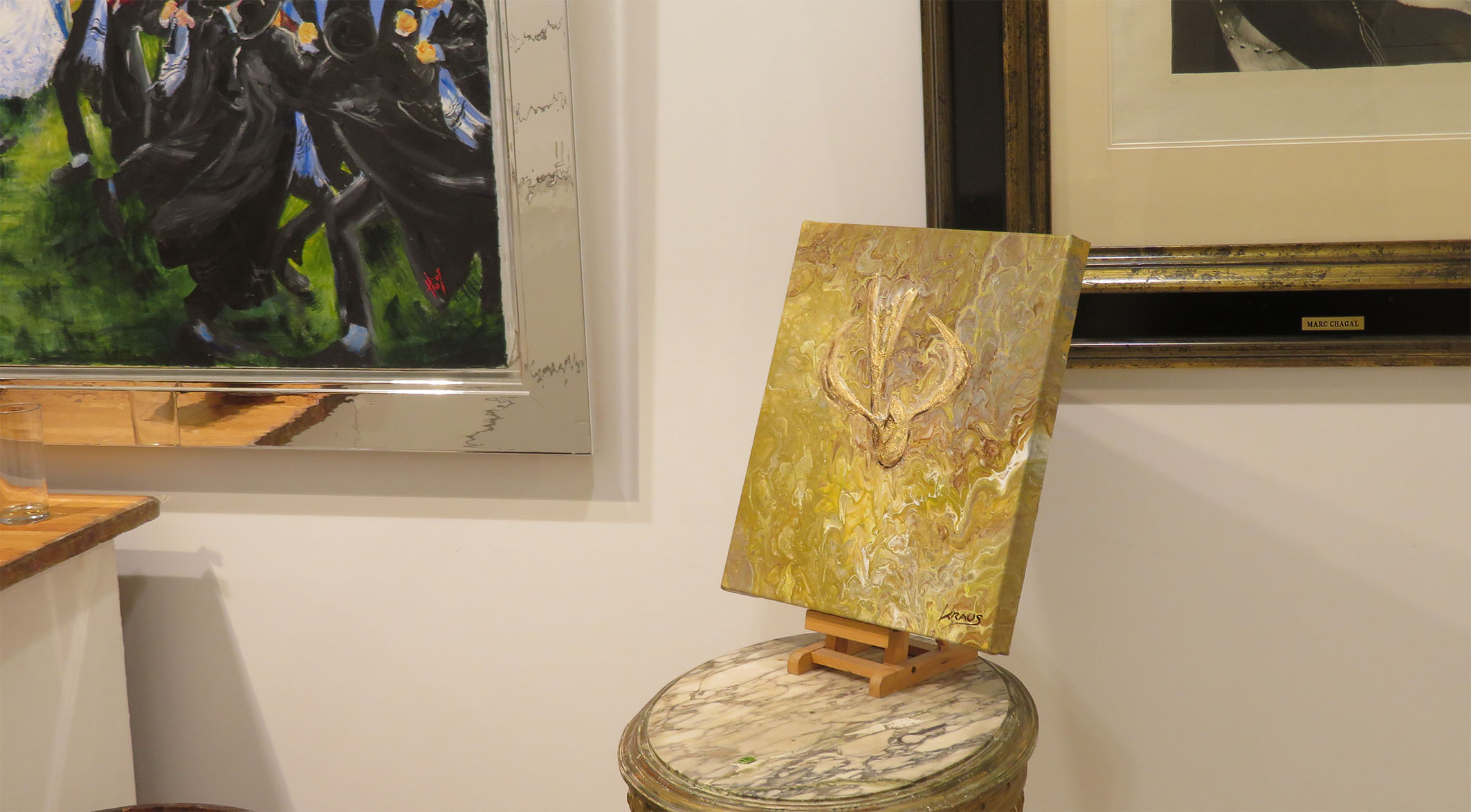
A landmark exhibition at Huvy’s Gallery, Jerusalem — where Aaron showed alongside his mentor Huvy Elisha and the legacy of Marc Chagall. Three voices, one city, one unbroken longing.


Alongside Huvy Elisha & the legacy of Marc Chagall · Huvy's Gallery, Jerusalem 2023

The studio is almost dark. A single spotlight falls across the canvas from the side. Aaron closes his eyes.
He is not painting from observation. He is painting from within — from the accumulated weight of Jerusalem’s streets, its celebrations, its kedusha, the faces of people he has encountered, the moments that don’t photograph.
The darkness severs the hand from habit. Without the usual visual reference points, the memory takes over. The proportions and tones live in the hands after decades of mixing — trained first under Huvy’s exacting eye, now flowing without calculation.
Light returns for final refinements. But the soul of the work is set in silence.
Aaron is available personally on WhatsApp — to discuss any work, answer any question, or help you find the piece that belongs in your home.